From Hospital Data to Global Evidence: TMU Advances Real-World Healthcare Research
Source: College of Management
Published on 2026-09-07
TMU is turning everyday clinical data into internationally connected real-world evidence to support safer, more precise, and more informed healthcare decisions.
Every hospital visit leaves behind more than a medical record. A prescription, laboratory result, diagnosis, or treatment decision can become part of a much larger picture, one that supports researchers in understanding how medicines perform, how treatment practices differ across countries, and where potential risks may emerge in daily practice.
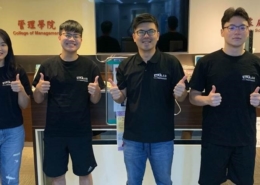
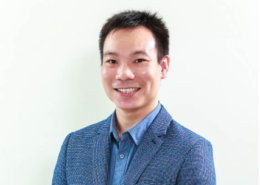
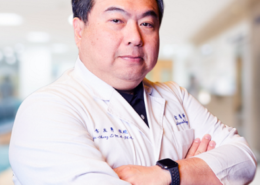
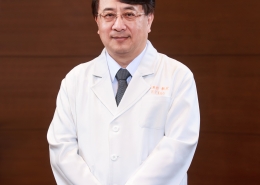
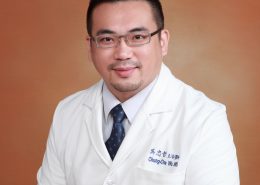
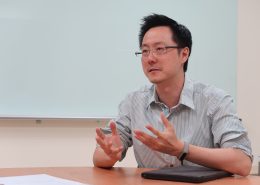
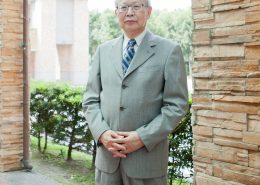
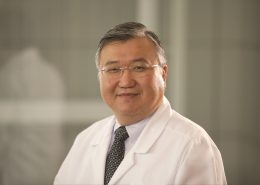
At Taipei Medical University, Professor Jason C. Hsu from the College of Management is helping transform clinical data into global research. Through data standardization, research infrastructure, and international collaboration, his work is expanding Taiwan’s contribution to real-world evidence and global health data science.
Making Hospital Data Speak the Same Language
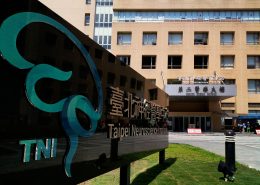
A major foundation of his work is the Taipei Medical University Clinical Research Database (TMUCRD), which integrates electronic health records from TMU’s three affiliated hospitals: Taipei Medical University Hospital, Taipei Municipal Wanfang Hospital, and Taipei Medical University Shuang-Ho Hospital.
TMUCRD has been converted into the Observational Medical Outcomes Partnership Common Data Model (OMOP CDM), an international standard used by the Observational Health Data Sciences and Informatics (OHDSI) global research network. By organizing clinical information under a common structure, TMU can participate more efficiently in large-scale studies with institutions worldwide.
Professor Hsu, President of the OHDSI Taiwan Society and Director of TMU’s Clinical Data Center, has played a key role in strengthening these international connections.

Overview of the Taipei Medical University Clinical Research Database (TMUCRD), integrating electronic health records from TMU’s three affiliated hospitals and external data sources, with de-identification and conversion to the OMOP Common Data Model for standardized research and OHDSI-based analyses.
To facilitate this integration for other institutions, Professor Hsu has promoted MediPlug, a patented system designed to help convert hospital data into the OMOP-CDM format more efficiently. Through TMUCRD, MediPlug, and the OHDSI framework, TMU is strengthening Taiwan’s role in global health data science and real-world evidence research.

MediPlug-enabled data transformation workflow, converting heterogeneous hospital EHR and Taiwan NHI data into the OMOP Common Data Model and enabling standardized OHDSI tools for cohort development, data quality assessment, and research analyses.
From Millions of Records to Real-World Answers
This infrastructure has already contributed to several major international studies. One study examined whether ranitidine, a once widely used stomach acid medication, was linked to higher cancer risk. Using 11 databases across Europe, North America, and Asia and data from more than 1.18 million people, researchers found no clear difference in cancer risk compared with users of similar stomach acid medications.
Another study explored how hypertension combination therapies are used in different countries. Analyzing 11 electronic health record databases across eight countries and regions, the study found that treatment patterns for dual combination therapy varied widely by country and demographic group, highlighting how treatment practices can vary across healthcare systems.
TMUCRD also contributed to a large drug-safety study on whether fluoroquinolone antibiotics, commonly used for urinary tract infections, increase the risk of aortic aneurysm or aortic dissection. After analyzing more than 13.5 million patients from 14 databases in five countries, the study found no increased risk in outpatient urinary tract infection treatment settings.
More recently, Professor Hsu and international collaborators compared the cardiovascular effects of GLP-1 receptor agonists and SGLT2 inhibitors, two major classes of diabetes medicines. Drawing on data from more than 1.24 million adults with type 2 diabetes, the study found that the individual medicines showed broadly similar cardiovascular benefits, including among patients with existing cardiovascular disease.
Advancing Health Data Science from Taiwan
Together, these studies demonstrate what becomes possible when clinical data are responsibly standardized and connected across borders.
Questions that may be difficult to answer within a single hospital or clinical trial can be investigated across millions of patients, healthcare systems, and countries. This creates new opportunities to assess medication safety, understand treatment patterns, and evaluate how therapies perform in real-world settings.
By connecting clinical data from its affiliated hospitals with international standards and research networks, TMU is helping transform healthcare experiences in Taiwan into evidence with global relevance.
Professor Hsu’s work demonstrates how clinical records and hospital data can become evidence, and how evidence can ultimately support safer, more precise, and more patient-centered healthcare.
Look for More Information
Original Article:
- Taipei Medical University Clinical Research Database: a collaborative hospital EHR database aligned with international common data standards
- Comparative Cardiovascular Effectiveness of Glucagon-Like Peptide 1 Receptor Agonists and Sodium-Glucose Cotransporter 2 Inhibitors in Diabetes Mellitus
- Risk of aortic aneurysm or dissection following use of fluoroquinolones: a retrospective multinational network cohort study
- Ranitidine Use and Incident Cancer in a Multinational Cohort
- Analysis of Dual Combination Therapies Used in Treatment of Hypertension in a Multinational Cohort
Author Profile: 
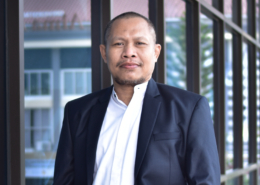
Jason C. Hsu, Professor, International Ph.D. Program in Biotech and Healthcare Management, College of Management
 https://oge.tmu.edu.tw/wp-content/uploads/2026/07/speedy-screening.png
1000
1000
iss
/wp-content/uploads/2018/05/02-紅logo並置.png
iss2026-10-06 11:57:572026-10-06 12:06:21TMU TOCFL Speedy Screening 華語快篩測驗
 https://oge.tmu.edu.tw/wp-content/uploads/2026/09/THE-WUR-2027-Ranking-Badges_RANK-TOP-350.png
2250
2250
global.initiatives
/wp-content/uploads/2018/05/02-紅logo並置.png
global.initiatives2026-09-30 21:06:242026-10-01 13:54:32TMU Climbs to 326–350 in THE World University Rankings 2027
 https://oge.tmu.edu.tw/wp-content/uploads/2026/09/IMG_4131-scaled.jpg
1707
2560
oge
/wp-content/uploads/2018/05/02-紅logo並置.png
oge2026-09-29 15:28:302026-10-02 11:50:52TMU Workshop Highlights Progress in Taiwan–U.S. Health Research
 https://oge.tmu.edu.tw/wp-content/uploads/2026/09/OGE-Post-Mid-Autumn-Poster2-1-pdf.jpg
2993
2116
iss
/wp-content/uploads/2018/05/02-紅logo並置.png
iss2026-09-18 17:25:502026-09-24 10:33:49【Event Information】2026 When Moon Festival meets Taiwan Day
 https://oge.tmu.edu.tw/wp-content/uploads/2026/09/Figure-New-Clues-to-Autoimmune-Diseases.png
204
680
global.initiatives
/wp-content/uploads/2018/05/02-紅logo並置.png
global.initiatives2026-09-14 14:42:012026-09-24 18:16:10New Clues to Autoimmune Diseases: TMU Team Uncovers How Antibodies Bind Unusual DNA
 https://oge.tmu.edu.tw/wp-content/uploads/2026/09/IMG_9518.jpg
1773
2364
global.initiatives
/wp-content/uploads/2018/05/02-紅logo並置.png
global.initiatives2026-09-11 16:57:142026-09-30 15:49:35A New Semester, New Connections: International Students Begin Their TMU Journey
 https://oge.tmu.edu.tw/wp-content/uploads/2026/09/TMUTU1-1-scaled.jpg
1440
2560
global.initiatives
/wp-content/uploads/2018/05/02-紅logo並置.png
global.initiatives2026-09-09 11:05:462026-09-23 10:58:04Two Decades of Partnership, A New Chapter Begins: The Liaison Office of Tohoku University Graduate School of Agricultural Science Opens at TMU
 https://oge.tmu.edu.tw/wp-content/uploads/2026/09/圖2-徐之昇From-Hospital-Data-to-Global-Evidence-1.png
986
1596
global.initiatives
/wp-content/uploads/2018/05/02-紅logo並置.png
global.initiatives2026-09-07 11:29:182026-09-24 18:16:15From Hospital Data to Global Evidence: TMU Advances Real-World Healthcare Research
 https://oge.tmu.edu.tw/wp-content/uploads/2026/09/2026-UAAT-Workshop.jpg
1600
1800
global.initiatives
/wp-content/uploads/2018/05/02-紅logo並置.png
global.initiatives2026-09-01 15:45:212026-09-14 17:08:10【Event Information】2026 UAAT × UTS × TMU Integrated Project International Collaboration Workshop