New Clues to Autoimmune Diseases: TMU Team Uncovers How Antibodies Bind Unusual DNA
Source: College of Medical Science and Technology
Published on 2026-09-14

The mechanism of antibody-mediated DNA B-to-Z transition
What if an antibody could do more than recognize DNA—and actually help reshape it?
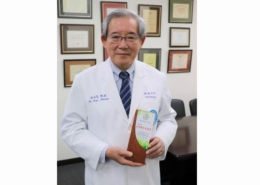
A cross-institutional research team led by Andrew H.-J. Wang, Academician of Academia Sinica and Chair Professor in the College of Medical Science and Technology at Taipei Medical University (TMU), together with Associate Professor Cheng-Chung Lee, has uncovered how an antibody recognizes and stabilizes one of DNA’s most unusual structures. Bringing together expertise from TMU, Academia Sinica, and Kyoto University, the collaborative team provides new insights into the molecular interactions between DNA structure and immune recognition.
Published in Nucleic Acids Research, the study provides the first atomic-level view of how an antibody specifically recognizes and stabilizes left-handed Z-DNA and reveals an unexpected ability of the antibody to promote DMA’s transition from its conventional form into this distinctive configuration. The findings offer new insights into the molecular basis of autoimmune diseases such as Systemic Lupus Erythematosus (SLE), in which antibodies against DNA are commonly observed.
The Mystery of Z-DNA: DNA with a Twist
DNA is most commonly known in its right-handed double helix form, referred to as B-DNA. But DNA is far more dynamic than it may appear. Under certain conditions, it can adopt alternative structures, including Z-DNA, a left-handed helix with a distinctive zigzag-shaped backbone.
Although Z-DNA was discovered decades ago, its transient and relatively unstable nature has made it challenging to study.
In recent years, scientists have recognized that Z-DNA is more than a structural curiosity. It plays active roles in gene regulation and immune responses to interactions between cells and viruses. However, an important question remained unanswered: how can proteins, especially antibodies, distinguish Z-DNA from conventional DNA forms?
An Antibody That Can Reshape DNA
To investigate this question, the TMU-led team engineered a specialized antibody fragment known as cZ22-Fab.
What they discovered was unexpected.
Rather than simply attaching to Z-DNA after it had formed, it can actively induce the transformation of normal B-DNA into the left-handed Z-DNA structure and then stabilize it.
Through a series of biophysical analyses, the researchers observed a progressive structural transition as the antibody interacted with DNA. Their findings revealed that the antibody not only recognizes a specific DNA structure but can also influence DNA conformation and selectively stabilize it. This discovery provides new insight into the dynamic relationship between antibodies and nucleic acids, showing that antibodies may actively shape DNA structure rather than simply binding to it.
A First Look at Atomic-Level Recognition
A major breakthrough came when the researchers captured the antibody–DNA complex at high resolution using crystallographic techniques, revealing the interaction at the atomic level and showing how the antibody distinguishes Z-DNA from other DNA forms.
The antibody interacts with Z-DNA through what the researchers describe as a “backbone-tracking” mechanism, forming multiple interactions with phosphate groups while also recognizing specific DNA bases. This combination of structural and sequence recognition enables the antibody to distinguish Z-DNA from other DNA conformations and stabilize its left-hand architecture.
New Clues to Autoimmune Diseases
The ability of antibodies to recognize DNA has important implications for human health. Under normal conditions, the immune system is regulated to avoid attaching the body’s own DNA. However, in certain autoimmune diseases, such as systemic lupus erythematosus (SLE), the immune system mistakenly produces antibodies against DNA.
Z-DNA is known to be particularly immunogenic, meaning it can more easily trigger immune responses. By revealing how antibodies specifically recognize Z-DNA, this study provides a clearer molecular framework for investigating how antibodies against unusual DNA structures may arise and participate in autoimmune responses.
From Molecular Discovery to Biomedical Applications
Beyond its fundamental scientific importance, this research also opens new avenues for practical applications. Understanding how antibodies distinguish specific DNA structures could eventually contribute to the development of new molecular probes, diagnostic approaches, or therapeutic strategies for autoimmune and inflammatory diseases.
In addition, antibody-based systems may serve as powerful molecular tools to monitor DNA structural changes in living cells, offering new possibilities in both research and clinical settings.
Decoding DNA’s Hidden Shapes
DNA is often depicted as a fixed double helix, but this study highlights a far more dynamic picture, one in which its structure can shift, interact with the immune system, and potentially influence disease-related processes.
By uncovering how an antibody interacts with one of DNA’s most elusive forms, this work not only deepens our understanding of molecular biology but also provides a new framework for investigating the relationship between unusual DNA structures and immune responses. Discoveries like this may bring us closer to understanding how changes at the molecular level can ultimately shape human health and disease.
Look for More Information
Original Article: Structural basis of B-to-Z DNA transition mediated by an anti-Z-DNA antibody
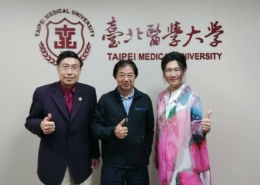
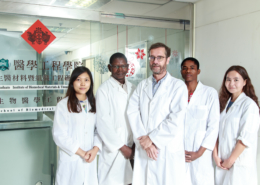
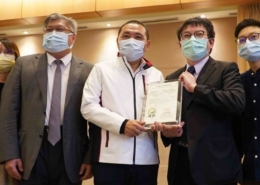
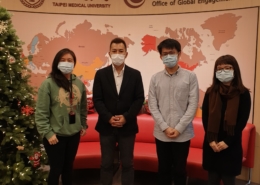
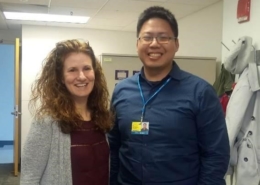
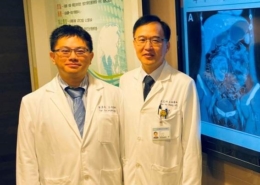
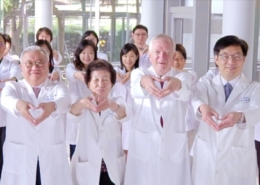
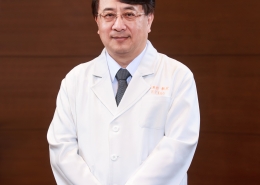
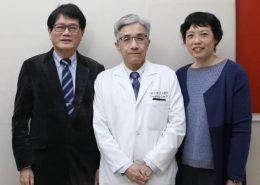
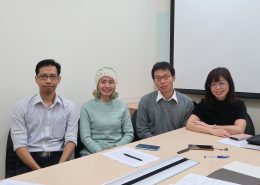
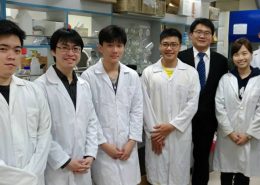
Author Profiles (From Left to Right):
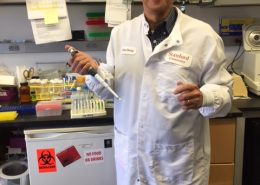
- Andrew H.-J. Wang, Academician of Academia Sinica and Chair Professor, College of Medical Science and Technology
- Cheng-Chung Lee, Associate Professor, Ph.D. Program in Innovative Medical Technology Research and Development Industry, College of Medical Science and Technology

 https://oge.tmu.edu.tw/wp-content/uploads/2026/07/speedy-screening.png
1000
1000
iss
/wp-content/uploads/2018/05/02-紅logo並置.png
iss2026-10-06 11:57:572026-10-06 12:06:21TMU TOCFL Speedy Screening 華語快篩測驗
 https://oge.tmu.edu.tw/wp-content/uploads/2026/09/THE-WUR-2027-Ranking-Badges_RANK-TOP-350.png
2250
2250
global.initiatives
/wp-content/uploads/2018/05/02-紅logo並置.png
global.initiatives2026-09-30 21:06:242026-10-01 13:54:32TMU Climbs to 326–350 in THE World University Rankings 2027
 https://oge.tmu.edu.tw/wp-content/uploads/2026/09/IMG_4131-scaled.jpg
1707
2560
oge
/wp-content/uploads/2018/05/02-紅logo並置.png
oge2026-09-29 15:28:302026-10-02 11:50:52TMU Workshop Highlights Progress in Taiwan–U.S. Health Research
 https://oge.tmu.edu.tw/wp-content/uploads/2026/09/OGE-Post-Mid-Autumn-Poster2-1-pdf.jpg
2993
2116
iss
/wp-content/uploads/2018/05/02-紅logo並置.png
iss2026-09-18 17:25:502026-09-24 10:33:49【Event Information】2026 When Moon Festival meets Taiwan Day
https://oge.tmu.edu.tw/wp-content/uploads/2026/09/Figure-New-Clues-to-Autoimmune-Diseases.png
204
680
global.initiatives
/wp-content/uploads/2018/05/02-紅logo並置.png
global.initiatives2026-09-14 14:42:012026-09-24 18:16:10New Clues to Autoimmune Diseases: TMU Team Uncovers How Antibodies Bind Unusual DNA
 https://oge.tmu.edu.tw/wp-content/uploads/2026/09/IMG_9518.jpg
1773
2364
global.initiatives
/wp-content/uploads/2018/05/02-紅logo並置.png
global.initiatives2026-09-11 16:57:142026-09-30 15:49:35A New Semester, New Connections: International Students Begin Their TMU Journey
 https://oge.tmu.edu.tw/wp-content/uploads/2026/09/TMUTU1-1-scaled.jpg
1440
2560
global.initiatives
/wp-content/uploads/2018/05/02-紅logo並置.png
global.initiatives2026-09-09 11:05:462026-09-23 10:58:04Two Decades of Partnership, A New Chapter Begins: The Liaison Office of Tohoku University Graduate School of Agricultural Science Opens at TMU
 https://oge.tmu.edu.tw/wp-content/uploads/2026/09/圖2-徐之昇From-Hospital-Data-to-Global-Evidence-1.png
986
1596
global.initiatives
/wp-content/uploads/2018/05/02-紅logo並置.png
global.initiatives2026-09-07 11:29:182026-09-24 18:16:15From Hospital Data to Global Evidence: TMU Advances Real-World Healthcare Research
 https://oge.tmu.edu.tw/wp-content/uploads/2026/09/2026-UAAT-Workshop.jpg
1600
1800
global.initiatives
/wp-content/uploads/2018/05/02-紅logo並置.png
global.initiatives2026-09-01 15:45:212026-09-14 17:08:10【Event Information】2026 UAAT × UTS × TMU Integrated Project International Collaboration Workshop