Transforming Health, Shaping the Future: TMU’s Leadership Team for a New Era
Source: Office of Global Engagement
Published on 2026-09-01
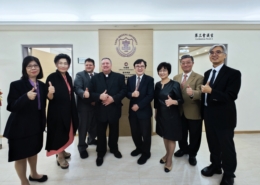
With new and expanded leadership across the University and its healthcare system, Taipei Medical University (TMU) is bringing education, research, clinical care, innovation, and global engagement closer to shape the future of health.
As healthcare becomes more complex, progress depends on more than medical expertise alone. It requires new ways of developing talent, translating research and technology into practice, and connecting academic strengths with real clinical needs and global partnerships.
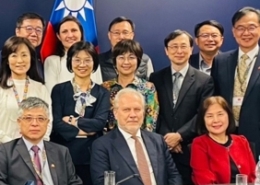
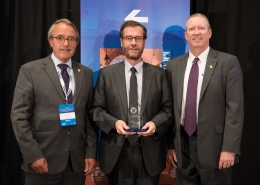
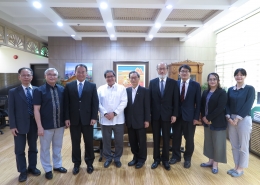
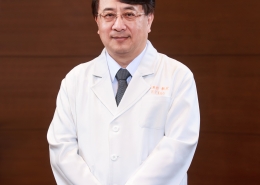
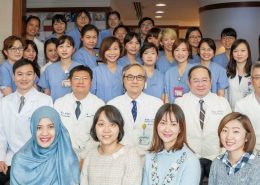
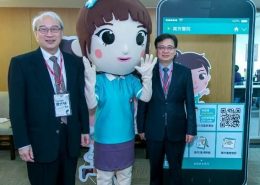
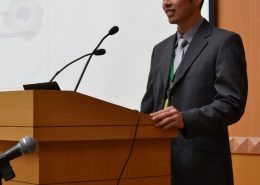
Led by Chairman Chien-Huang Lin and President Mai-Szu Wu, TMU’s leadership team brings together expertise spanning higher education, biomedical research, healthcare delivery, digital transformation, sustainability, innovation, and international collaboration. Several leaders are taking on new or expanded roles across the University and its affiliated hospitals, creating stronger links between academic strategy and frontline healthcare.
Together, they are advancing a shared ambition: to cultivate the next generation of biomedical talent, accelerate research and innovation, strengthen TMU’s integrated academic and healthcare system, and transform knowledge into greater impact on health and society.
Chairman Chien-Huang Lin: Stewarding TMU’s Next Chapter
 An alumnus of TMU’s School of Pharmacy, Chien-Huang Lin has experienced the University as a researcher, educator, administrator, president, and now Chairman. He holds graduate degrees in pharmacology from National Taiwan University and has undertaken academic at appointments at the University of California, San Francisco and Imperial College London.
Before becoming Chairman, Lin held leadership positions across academic affairs, research and development, and university administration before serving as Vice President and President. His experience extends beyond the university through leadership in higher education social responsibility and Taiwan’s biomedical education, research, healthcare, innovation, society.
President Mai-Szu Wu: Connecting Education, Research, and Healthcare to Transform Health
 A TMU School of Medicine alumnus and nephrologist, Mai-Szu Wu has built his career across clinical medicine, biomedical research, and healthcare leadership.
Before becoming President in 2023, Wu served as Vice President of TMU and Superintendent of Shuang Ho Hospital. His clinical and research career has focused particularly on chronic kidney disease, transplantation, stem-cell therapy, and community-based disease prevention.
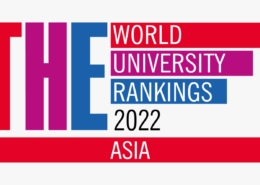
Under his leadership, TMU MU has continued to strengthen its academic and healthcare profile, including reaching #97 in the Times Higher Education Asia University Rankings. The University has also advanced initiatives in digital transformation, value-based healthcare, sustainability, and talent development.
Wu’s focus is now on bringing these strengths into closer alignment. By connecting education, research, biomedical innovation, and the clinical resources of TMU’s affiliated hospitals to accelerate the translation of knowledge into better healthcare.
Vice President Jan-Show Chu: Educating Talent for a Changing World
 Pathologist Jan-Show Chu has spent much of her career connecting medicine with education. A TMU School of Medicine alumna, she has held leadership roles spanning pathology, faculty development, healthcare quality, sustainability, and academic affairs.
As Dean of Academic Affairs, Chu led curriculum reforms that expanded student flexibility and promoted new approaches such as flipped classrooms, medical simulation, AI, and virtual reality.
Her work has also linked education with sustainability. Through TMU’s One Campus sustainability living lab, faculty, students, administrators, and healthcare professionals work together on challenges across the University and its hospitals.
These initiatives support a broader institutional commitment that saw TMU rank #5 worldwide for SDG 3: Good Health and Well-being in the 2026 Times Higher Education Sustainability Impact Ratings.
For Chu, future-ready education means preparing students not only with professional knowledge, but also with the interdisciplinary and adaptive skills needed to respond to technological, environmental, and healthcare change.
Vice President Pei-Shan Tsai: Connecting Talent, Partnerships, and Global Impact
 Pei-Shan Tsai has built a career spanning research, education, academic leadership, and international collaboration since joining TMU in 2003.
Tsai has published more than 200 academic papers and has participated extensively in international professional organizations and journal editorial boards. She also served as Dean of TMU’s College of Nursing from 2023 to 2026. During this period, TMU Nursing maintained its position among the world’s top 50 in the QS World University Rankings by Subject, reaching #33 globally in 2026.
As Executive Vice President, Tsai oversees areas including international affairs, public relations and alumni services, lifelong learning, health promotion, and several academic colleges, giving her a broad platform to connect talent development with TMU’s international ambitions.
Her priorities include cultivating students and faculty with global and interdisciplinary capabilities, attracting international talent, and developing deeper partnerships through dual-degree, jointly delivered courses, multinational research, and faculty and student exchange.
The goal is to move beyond mobility alone and build sustained international partnerships that expand TMU’s academic reach social impact.
Vice President Yih-Giun Cherng: Turning Innovation into Institutional Impact
 Physician and healthcare administrator, Yih-Giun Cherng brings together clinical expertise, data-driven decision-making, and institutional management.
Cherng joined Shuang Ho Hospital when it opened in 2008 and progressed through leadership roles in healthcare quality, medical affairs, and hospital management. His work has incorporated artificial intelligence, big data, and health insurance data into models for improving perioperative safely and risk prediction.
As Superintendent, Cherng led Shuang Ho Hospital through its accreditation as a medical center in 2024 while advancing digital transformation, sustainable healthcare, aging care, and community health.
Now serving as Executive Vice President, Cherng is focused on gconnecting TMU’s research, clinical, talent, and industry resources so that promising ideas can move beyond individual projects and become scalable solutions. For Cherng, innovation is most meaningful when it can be implemented, measured, and translated into lasting institutional impact.
Vice President and TMUH Superintendent Chun-Ming Shih: Connecting the University and Healthcare System
 Cardiologist Chun-Ming Shih has spent more than two decades within the TMU healthcare system, with experience spanning clinical medicine, research, education, healthcare quality, and hospital management.
Since becoming Superintendent of Taipei Medical University Hospital (TMUH) in 2023, Shih continued to advance the three core missions of a university hospital-clincal care, education, and research-while strengthening smart healthcare, specialty care, research development, and patient-centered services.
Shih has also promoted collaboration beyond TMUH, including a healthcare quality and patient-safety alliance connecting six hospitals across Taipei and New Taipei City. He also participated in medical missions to countries including Guatemala and Eswatini, while TMUH expanded rural outreach through telemedicine.
In August 2026, Shih took on the additional role of Executive Vice President of TMU. His dual appointment gives him a distinctive position bridging university strategy and frontline clinical needs, heling clinical practice, talent development, digital health, and interdisciplinary research move more effectively between campus and hospital
Vice President and Shuang Ho Hospital Superintendent Tsan-Hon Liou: Building a People-Centered Innovative University
 A TMU School of Medicine Alumnus and rehabilitation specialist, Tsan-Hon Liou has more than 30 years of clinical and leadership experience across TMU’s Healthcare System.
After serving in senior roles at both Wan Fang Hospital and Shuang Ho Hospital, including as Superintendent of Wan Fang, Liou returned to Shuang Ho Hospital in July 2026 as its seventh Superintendent while also becoming Executive Vice President of TMU.
His vision of an “innovative university” centers on creating stronger connections between medicine and technology, clinical questions and research, and academic ideas and real-world application.
His concurrent roles at TMU and Shuang Ho Hospital give this vision a practical foundation. Hospitals encounter real patient needs every day; the University contributes knowledge, talent, and research that can help solve them. Liou aims to bring the two sides closer together across fields including AI, precision medicine, biomedical technology, aging, and community health.
For Liou, however, innovation is ultimately people-centered. Whether through AI, precision medicine, biomedical technology, new models of care, or new approaches to teaching, innovation matters when it enables better healthcare and improves people’s lives.
Wan Fang Hospital Superintendent and Chief Executive for Innovation Kang-Yun Lee: From Strategy to Innovation in Practice
 Pulmonologist Kang-Yun Lee combines clinical medicine, translational research, and institutional leadership. A TMU School of Medicine alumnus with a Ph.D. from Imperial College London, he has held leadership roles across the TMU healthcare system, including at Shuang Ho Hospital, TMU’s Office of Research and Development, and most recently as Executive Vice President.
In 2026, Lee became both the ninth Superintendent of Wan Fang Hospital and TMU’s Chief Executive for Innovation. He took the helm shortly after Wan Fang achieved HIMSS Electronic Medical Record Adoption Model (EMRAM) Stage 7, the highest level of the international digital-maturity framework, providing a strong digital foundation for the hospital’s next phase.
His vision of “healthy longevity” brings together precision health, integrated care, and proactive health management. Wan Fang plans to combine AI and clinical data with health examinations, precision testing, and genomic information to support personalized risk prediction and health management. The hospital will also develop integrated approaches around cardiac, kidney, metabolic, and liver health, using multidisciplinary care and lifestyle intervention to address risks before they progress.
His dual roles place him at the point where TMU’s research, data, technology, and talent can be translated into healthcare solutions and tested in real-world clinical practice.
Together, these appointments bring TMU’s academic and healthcare leadership into closer alignment. By connecting education, research, clinical care, innovation, and international engagement across the University and its affiliated hospitals, TMU is creating stronger pathways for talent, ideas, and clinical needs to move across the system. This closer integration will help turn research into practice, innovation into better care, and institutional strengths into meaningful impact for patients, communities, and society.

 https://oge.tmu.edu.tw/wp-content/uploads/2026/07/speedy-screening.png
1000
1000
iss
/wp-content/uploads/2018/05/02-紅logo並置.png
iss2026-10-06 11:57:572026-10-06 12:06:21TMU TOCFL Speedy Screening 華語快篩測驗
 https://oge.tmu.edu.tw/wp-content/uploads/2026/09/THE-WUR-2027-Ranking-Badges_RANK-TOP-350.png
2250
2250
global.initiatives
/wp-content/uploads/2018/05/02-紅logo並置.png
global.initiatives2026-09-30 21:06:242026-10-01 13:54:32TMU Climbs to 326–350 in THE World University Rankings 2027
 https://oge.tmu.edu.tw/wp-content/uploads/2026/09/IMG_4131-scaled.jpg
1707
2560
oge
/wp-content/uploads/2018/05/02-紅logo並置.png
oge2026-09-29 15:28:302026-10-02 11:50:52TMU Workshop Highlights Progress in Taiwan–U.S. Health Research
 https://oge.tmu.edu.tw/wp-content/uploads/2026/09/OGE-Post-Mid-Autumn-Poster2-1-pdf.jpg
2993
2116
iss
/wp-content/uploads/2018/05/02-紅logo並置.png
iss2026-09-18 17:25:502026-09-24 10:33:49【Event Information】2026 When Moon Festival meets Taiwan Day
 https://oge.tmu.edu.tw/wp-content/uploads/2026/09/Figure-New-Clues-to-Autoimmune-Diseases.png
204
680
global.initiatives
/wp-content/uploads/2018/05/02-紅logo並置.png
global.initiatives2026-09-14 14:42:012026-09-24 18:16:10New Clues to Autoimmune Diseases: TMU Team Uncovers How Antibodies Bind Unusual DNA
 https://oge.tmu.edu.tw/wp-content/uploads/2026/09/IMG_9518.jpg
1773
2364
global.initiatives
/wp-content/uploads/2018/05/02-紅logo並置.png
global.initiatives2026-09-11 16:57:142026-09-30 15:49:35A New Semester, New Connections: International Students Begin Their TMU Journey
 https://oge.tmu.edu.tw/wp-content/uploads/2026/09/TMUTU1-1-scaled.jpg
1440
2560
global.initiatives
/wp-content/uploads/2018/05/02-紅logo並置.png
global.initiatives2026-09-09 11:05:462026-09-23 10:58:04Two Decades of Partnership, A New Chapter Begins: The Liaison Office of Tohoku University Graduate School of Agricultural Science Opens at TMU
 https://oge.tmu.edu.tw/wp-content/uploads/2026/09/圖2-徐之昇From-Hospital-Data-to-Global-Evidence-1.png
986
1596
global.initiatives
/wp-content/uploads/2018/05/02-紅logo並置.png
global.initiatives2026-09-07 11:29:182026-09-24 18:16:15From Hospital Data to Global Evidence: TMU Advances Real-World Healthcare Research
 https://oge.tmu.edu.tw/wp-content/uploads/2026/09/2026-UAAT-Workshop.jpg
1600
1800
global.initiatives
/wp-content/uploads/2018/05/02-紅logo並置.png
global.initiatives2026-09-01 15:45:212026-09-14 17:08:10【Event Information】2026 UAAT × UTS × TMU Integrated Project International Collaboration Workshop