A Smarter Way to Fight Antibiotic-Resistant Bacteria
Source: College of Pharmacy
Published on 2026-10-30
Unlocking greater effectiveness through smarter antibiotic delivery
What if fighting bacterial infections did not begin with developing a stronger drug, but with finding a smarter way to deliver one?
As more bacteria learn how to resist existing antibiotics, bacterial infections are harder to treat. Doctors and researchers are exploring new strategies that can improve the effectiveness of existing and naturally delivered antibacterial agents. One promising solution is to help medicines reach the right place at the right time.
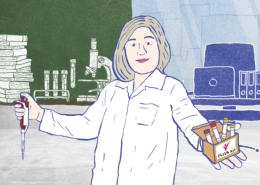
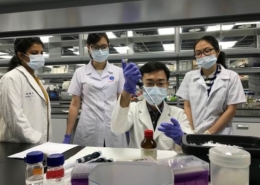
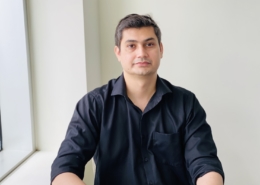
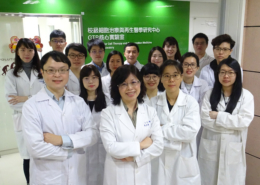
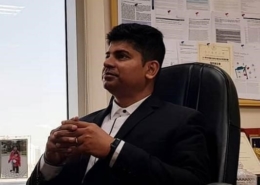
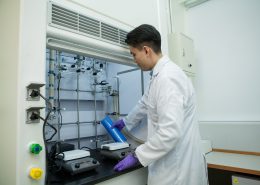
A research team at Taipei Medical University (TMU), led by Assistant Professor Vijayakameswara Rao Neralla from the Ph.D. Program in Drug Discovery and Development Industry, have nano-scaled the process by developing nanocarriers to protect natural antibacterial compounds and releasing them more efficiently under conditions similar to those found at infection sites. Their results show that this approach can make natural antibacterial agents work much more effectively.
Rather than creating a new antibiotic, the research demonstrates how smart drug delivery could help existing bioactive compounds work more effectively. Opening another avenue for tackling increasingly difficult bacterial infections.
Using Tiny “Delivery Vehicles”
Many plant-derived compounds can naturally kill or slow the growth of bacteria. The challenge is getting them to work effectively inside the body.
To solve this problem, the researchers used two highly porous nanomaterials, called ZIF-67 and ZIF-8, as tiny delivery vehicles. They loaded these materials with two natural compounds:
- Saponin, which can damage bacterial cell membranes.
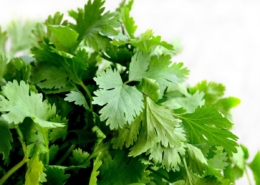
- Apigenin, a natural plant compound found in parsley, chamomile, and many fruits and vegetables that has antibacterial, antioxidant, and anti-inflammatory properties.
Yet natural compounds can face limitations such as instability, rapid degradation, or inefficient delivery to their intended target. The nanocarriers protect these natural compounds until they reach their target.

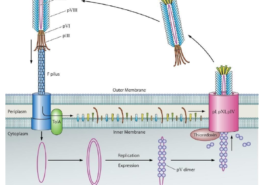
Bioactive Saponin and Apigenin Encapsulation with ZIF-67 and ZIF-8 Nano Frameworks

Antibacterial Study, Computational Analysis, and Molecular Modeling of ZIF-67 and ZIF-8 Nanoplatforms
Releasing Medicine Only Where It’s Needed
One of the most promising features of the new system is its ability to respond to its surroundings.
Many infection-associated microenvironments become more acidic than healthy physiological conditions. The researchers found that the nanocarriers released the antibacterial compounds slowly under normal conditions but much faster in acidic environments similar to infection sites.
In other words, the nanocarrier does more than simply transport its cargo—it responds to the conditions around it.
Such targeted release could eventually contribute to more efficient drug delivery while reducing unnecessary exposure outside the intended site.
Stronger Antibacterial Performance: Results Against Several Harmful Bacteria
The team tested the new formulations against four bacteria associated with human infections, including E. coli, Pseudomonas aeruginosa, Enterococcus faecalis, and Streptococcus mutans.
Compared with the natural compounds alone, the nanocarrier-based formulations were much more effective at stopping bacterial growth. Among all the combinations, ZIF-67 loaded with apigenin produced the strongest antibacterial effect.
The findings suggest that effectiveness depends not only on what antibacterial compound is used, but also how it is protected, transported, and released.
Looking at the Interaction at the Molecular Level
The researcher team went beyond laboratory antibacterial testing to investigate why the nanomaterials might perform so effectively.
Their analysis showed that the nanomaterials can bind strongly to PBP2a, a protein that bacteria use to build their protective cell walls and one that is closely linked to antibiotic resistance. This helps explain why the new formulations performed better than the natural compounds alone.
Rethinking the Fight Against Antibiotic Resistance
The growing challenge of antibiotic resistance will likely require more than simply discovering new antibiotics. It will also require better ways to use antibacterial agents-making them more stable, more precise, and more effective.
By intergrating natural compounds with smart nanocarriers, the researchers created a system that protects the medicine, releases it at infection sites, and improves its ability to kill bacteria.
The broader potential extends beyond saponin and apigenin. Because metal-organic frameworks can be engineered to carry different therapeutic compounds, similar platforms could eventually be adapted for a wide range of biomedical applications.
The study represents a shift in perspective: sometimes the next breakthrough does not come from creating a stronger medicine, but from designing a smarter way for medicine to reach its target.
Look for More Information
Original Article:
Integrated Computational and Experimental Investigation of Bioactive ZIF-67/ZIF-8 Frameworks Loaded with Saponin and Apigenin for Antibacterial Applications
Keywords:
Antibacterial, Saponin, Apigenin, Antibiotic Resistance, Nanocarriers, Nanomedicine,
Author Profile:
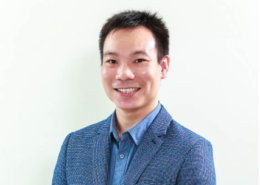
Vijayakameswara Rao Neralla, Assistant Professor, Ph.D. Program in Drug Discovery and Development Industry, College of Pharmacy
 https://oge.tmu.edu.tw/wp-content/uploads/2026/11/banner.png
315
851
iss
/wp-content/uploads/2018/05/02-紅logo並置.png
iss2026-11-13 17:05:052026-11-13 17:33:11Biomedical Engineering Industry Fair (2026 GCMBE) & Career Workshops
 https://oge.tmu.edu.tw/wp-content/uploads/2026/11/2026.10.20_TMU.jpg
1108
1477
gps
/wp-content/uploads/2018/05/02-紅logo並置.png
gps2026-11-13 11:57:202026-11-13 11:57:20Inward Visit_ Université Libre de Bruxelles, Belgium
 https://oge.tmu.edu.tw/wp-content/uploads/2026/11/cwru-scaled.jpg
1920
2560
global.initiatives
/wp-content/uploads/2018/05/02-紅logo並置.png
global.initiatives2026-11-05 17:11:182026-11-13 13:56:26More Than a Decade, One Shared Purpose: TMU and CWRU Celebrate a Partnership Built to Last
 https://oge.tmu.edu.tw/wp-content/uploads/2026/11/QS-Asia-University-Rankings-2027.jpg
1393
1742
global.initiatives
/wp-content/uploads/2018/05/02-紅logo並置.png
global.initiatives2026-11-03 11:21:562026-11-05 13:57:11TMU Ranks First Among Taiwan’s Private Universities in QS World University Rankings: Asia 2027
 https://oge.tmu.edu.tw/wp-content/uploads/2026/03/Gemini_Generated_Image_5t25yu5t25yu5t25.png
1024
1024
iss
/wp-content/uploads/2018/05/02-紅logo並置.png
iss2026-11-02 10:37:092026-11-02 10:37:09TMU Scholarship (Fall Intake 2025) Renewal and First-Time Applications Now Open
 https://oge.tmu.edu.tw/wp-content/uploads/2026/10/Bioactive-Saponin-and-Apigenin-Encapsulation-2.png
1401
1868
global.initiatives
/wp-content/uploads/2018/05/02-紅logo並置.png
global.initiatives2026-10-30 16:16:272026-11-02 10:08:47A Smarter Way to Fight Antibiotic-Resistant Bacteria
https://oge.tmu.edu.tw/wp-content/uploads/2026/03/Gemini_Generated_Image_5t25yu5t25yu5t25.png
1024
1024
iss
/wp-content/uploads/2018/05/02-紅logo並置.png
iss2026-10-30 15:41:302026-10-30 15:52:56Announcement of 2026 MOE Elite Scholarship Results
 https://oge.tmu.edu.tw/wp-content/uploads/2026/10/S__67731492.jpg
1108
1477
gps
/wp-content/uploads/2018/05/02-紅logo並置.png
gps2026-10-29 17:54:472026-10-29 17:54:47Inward Visit_ Université Catholique de Louvain, Belgium
 https://oge.tmu.edu.tw/wp-content/uploads/2026/10/S__67747847.jpg
1477
1108
gps
/wp-content/uploads/2018/05/02-紅logo並置.png
gps2026-10-28 17:55:562026-10-28 17:59:22Inward Visit_ Sophiahemmet Group & Sophiahemmet University, Sweden